
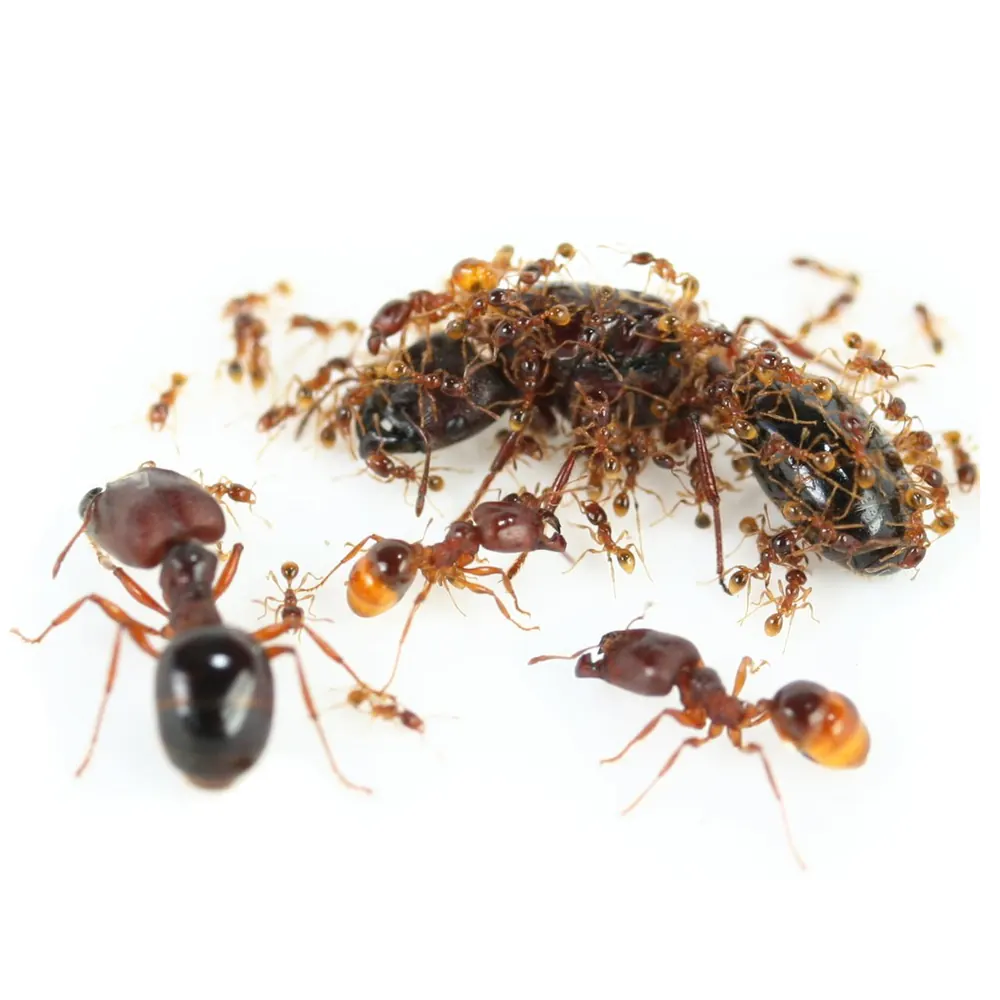
The quickest way to sort out an insect problem in Newton Park is to identify the insect properly before anyone sprays anything. Ants, cockroaches, fishmoths, fleas and wasps all need different treatments, and a general spray that doesn't match the insect usually just moves the problem around. Send us a photo, or let us inspect, and we'll treat the actual cause.
Why a central suburb gets so many different insects
Newton Park packs a lot into a small area. Older homes with established gardens, flats and townhouses, and a strip of shops, offices and eateries along the main roads all sit close together, with Greenacres next door. Each of those environments suits a different set of insects, and because they're side by side, insects from one easily turn up in another.
Port Elizabeth's mild, humid climate adds to it. With no hard frost, most insects here slow down in winter rather than disappearing, so problems that started in summer often carry on quietly through the cooler months.
What a Newton Park year tends to look like
Spring
Ants become more active and start trailing indoors, especially after rain. Paper wasps begin new nests under eaves, in gutters and around window frames. It's a good time to deal with both before the colonies grow.
Summer
Flies around bins and kitchens, mosquitoes from standing water, fleas building up in gardens where pets lie, and cockroaches at their most active. Restaurants and takeaways feel this most.
Autumn and winter
Cockroaches and fishmoths keep going indoors where it's warm. Bird mites can appear after birds that nested in the roof have left. Spiders become more noticeable as they come in out of the weather.
Three broad groups, three different approaches
Crawling insects such as cockroaches, ants and fishmoths live in cracks, cupboards, drains and wall gaps. They're treated with gel baits, ant baits and residual sprays placed where they hide. Read more about crawling insect treatment in Newton Park.
Flying insects like flies, mosquitoes and wasps are about breeding sites and nests. Find where they breed and the numbers drop. See our page on flies, wasps and mosquitoes in Newton Park.
Biting insects are bed bugs, fleas and bird mites. These need careful identification because the bites can look alike and the treatments are completely different. Our biting insect page for Newton Park explains how we work out which one it is.
How a visit works
- Identify. We confirm which insect it is, and the species where it matters, because a German cockroach and an American cockroach are dealt with differently.
- Trace the source. Where is it nesting, what's it feeding on, and is there damp or a gap that's helping it? In older homes this is often a leaking pipe or an old cupboard. In flats it may be the unit next door.
- Treat. Baits, odourless and non-staining residual sprays, barrier treatments or targeted nest treatment, chosen for the insect and the space. You don't need to move out for normal insect treatments; keep kids and pets off treated surfaces until dry.
- Follow up where needed. Some insects, cockroaches especially, leave eggs behind that hatch after treatment. We'll tell you if a second visit makes sense.
For shops, offices and eateries
Businesses on Newton Park's busy roads have deliveries coming in, bins going out and staff kitchens in use all day. That makes one-off treatments less effective than a regular schedule. We set up monitoring contracts that cover the insects you're most likely to get, planned around your hours, with records kept.
A common mistake
Buying a can of doom and spraying every insect you see. Sprays kill what they touch, but they don't reach the nest, and with ants they can split one colony into several. With cockroaches, a sprayed surface stops them taking bait. If a few insects are a once-off, a spray is fine. If they keep coming back, the nest needs to be found.
A local tip
Check the gutters and the drip trays under pot plants on your stoep. In a suburb full of established gardens and older roofs, a blocked gutter holding water is a mosquito nursery, and a damp, leaf-filled gutter also draws cockroaches and fishmoths towards the roof.
What does it cost?
It depends on which insect, how widespread it is and the size of the property. A single wasp nest or a small ant problem is a short visit. Cockroaches through a block of flats or a commercial kitchen take longer and usually need a follow-up. We'll quote once we've seen it, and if a simple change at home is all you need, we'll tell you.
For a wider view of the insects we treat, see insect control in Port Elizabeth, or read our guide to household insects. Rodents and other non-insect pests are covered on our main Newton Park pest control page.
Call 087 012 5550, or WhatsApp us a photo of the insect and we'll identify it for you.
Questions we get asked
Can you tell me what insect I have from a photo?
Usually, yes. A clear, close-up photo on WhatsApp is often enough to identify it and suggest the next step.
Why do insects keep coming back after I spray?
Because spray kills the insects it touches but not the nest or the eggs. Until the source is treated, new ones keep appearing.
Are insects active in winter in Port Elizabeth?
Many are. Without hard frost, cockroaches, fishmoths and ants carry on indoors through the cooler months, just at a slower pace.
Is the treatment safe for my children and pets?
Yes, when used as directed. Keep children and pets off treated surfaces until they're dry, and we'll tell you anything else to cover or move beforehand.
Do you treat insects in offices and shops?
Yes. We treat commercial premises in Newton Park, either as a once-off or on a scheduled monitoring contract.