
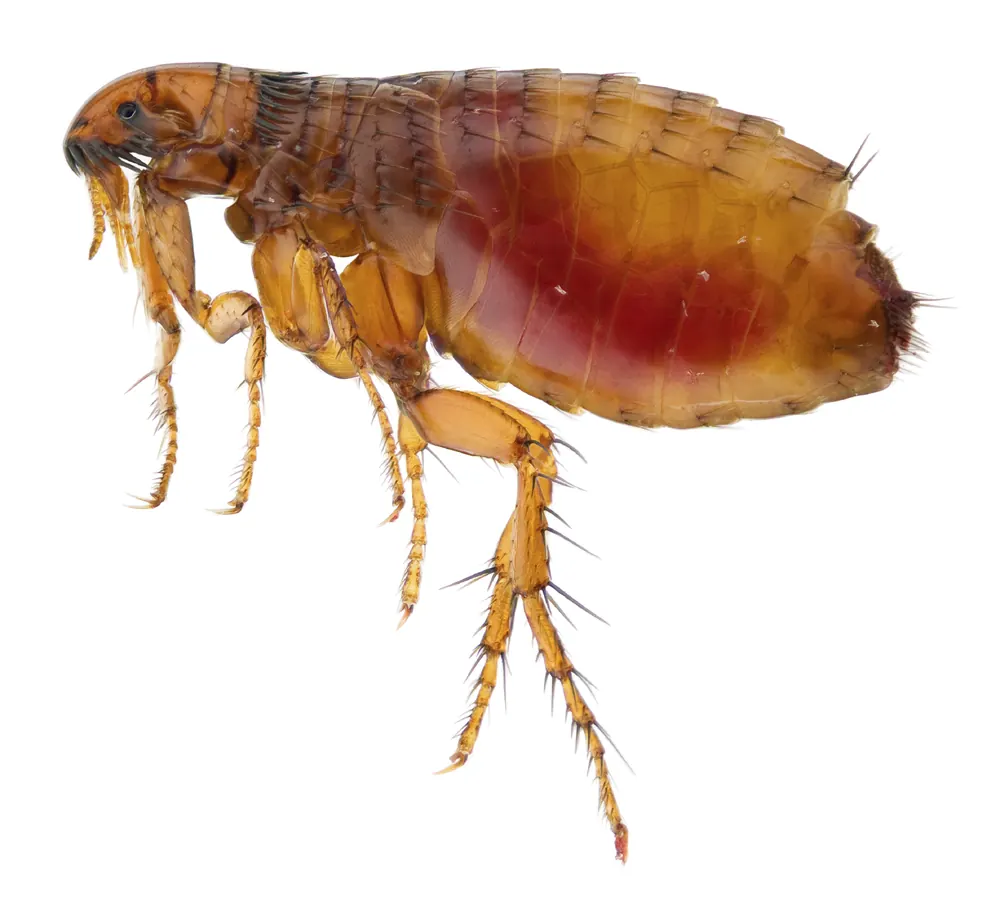
Here's the part most people don't know: only a small share of the fleas in a home are on the pet at any time. Most are eggs, larvae and pupae in carpets, under furniture, in pet bedding and in the shady patches of yard where your dogs lie. That's why a flea collar or a bath alone doesn't end an infestation. To clear fleas, the pets, the house and the yard have to be treated together.
Fleas and the Kariega yard
Many homes in Kariega have dogs, and many of those dogs spend hot afternoons in the coolest place they can find: under a stoep, beneath a carport, under a bakkie or in a dug-out hollow by the wall. Flea larvae like those same spots. They need shade and a bit of humidity, and the dust and debris in a sheltered corner give them both, while the open yard around them bakes. So in a hot, dry town, flea populations concentrate in a few places, which is actually good news: it makes them easier to target.
Fleas also build up in older homes with carpets, rugs and gaps between floorboards, where larvae shelter and feed on organic dust.
Signs of fleas
- Itchy bites on the ankles and lower legs
- Pets scratching, biting at their tail or losing patches of fur
- Tiny dark specks in pet bedding that turn red-brown when dampened (flea dirt)
- Fleas jumping onto white socks when you walk across the carpet
- A sudden burst of bites after coming back from holiday or moving into a house
The empty house surprise
A common Kariega call is from people who've just moved in, or come home after a few weeks away, and are suddenly covered in bites. Flea pupae can sit dormant in carpets for a long time and hatch when they feel vibration and warmth. A house whose previous owners had pets can be full of waiting pupae. A treatment before moving furniture in prevents a miserable first week.
How we treat fleas
- Ask about the pets. We'll ask you to arrange vet-recommended flea treatment for every dog and cat on the property on the same day as our visit.
- Treat inside. Carpets, rugs, under furniture, pet sleeping areas and gaps along skirtings are treated with a residual product that also targets the developing stages.
- Treat outside. We concentrate on the shaded resting spots, kennels, under stoeps and carports, and anywhere the dogs dig or lie.
- Follow-up if needed. Pupae are protected inside their cocoon, so a few new fleas may appear for a couple of weeks. In heavier infestations a second treatment finishes the job.
You don't need to leave home. Keep everyone, including the pets, off treated areas until they're dry.
What to do before we arrive
Vacuum thoroughly, including under beds and couches, and throw the vacuum bag away or empty the canister outside. Wash pet bedding in hot water. Pick up toys and loose items from the floor. Vacuuming also wakes pupae so they come out to meet the treatment. Don't wash or vacuum the treated carpets for a few days afterwards, so the product has time to work on newly hatched fleas.
The local tip
Rake out and sweep the dogs' favourite shaded spots once a week in summer, and let sun reach them where you can. Removing the layer of dust, hair and debris takes away what flea larvae need to develop. A washable bed in the shade is far easier to keep clean than a dug-out hollow under the stoep.
What people often get wrong
Treating the dog and stopping there. The fleas on the dog die, but new ones keep hatching from the yard and carpet and jumping straight back on. Or the house is treated but not the pets, and they carry new fleas inside within days. All three have to be done together.
What does it cost?
It depends on the size of the house, how much carpet there is, how big the yard is and how many resting spots need treating. A light problem caught early, with pets treated, regular vacuuming and a clean-up of the yard, can sometimes be handled without us. A heavier infestation needs a proper treatment. We'll quote once we know the size of the job.
If the bites don't fit the flea pattern, our page on identifying biting insects in Kariega may help, or see our general pest control in Kariega. We also treat fleas around Port Elizabeth and flea problems in Despatch.
Call 087 012 5550, or WhatsApp us and tell us about your pets and where the bites are.
Questions we get asked
Do I have to treat my pets if you treat the house?
Yes. Pets must be treated, ideally with a product your vet recommends, on the same day. Otherwise they bring fleas straight back.
Why am I still seeing fleas a week after treatment?
Pupae inside their cocoons aren't affected until they hatch. New fleas die after contact with the treated surfaces, and numbers drop off over a couple of weeks.
Can fleas live in my yard without pets?
For a while, yes, especially if stray cats or wildlife use the yard. Without hosts, the population eventually dies out.
Is the flea treatment safe for my dog?
Yes, once it's dry. Keep pets off treated areas until then, and we'll tell you when it's safe.
Why did I get bitten as soon as I moved in?
Dormant flea pupae in the carpet often hatch when a house is occupied again. Treating before moving in prevents it.
How do I know it's fleas and not something else?
Flea bites are mostly on the ankles and lower legs. Brushing your pet over white paper and looking for dark specks that turn reddish when wet confirms fleas.