
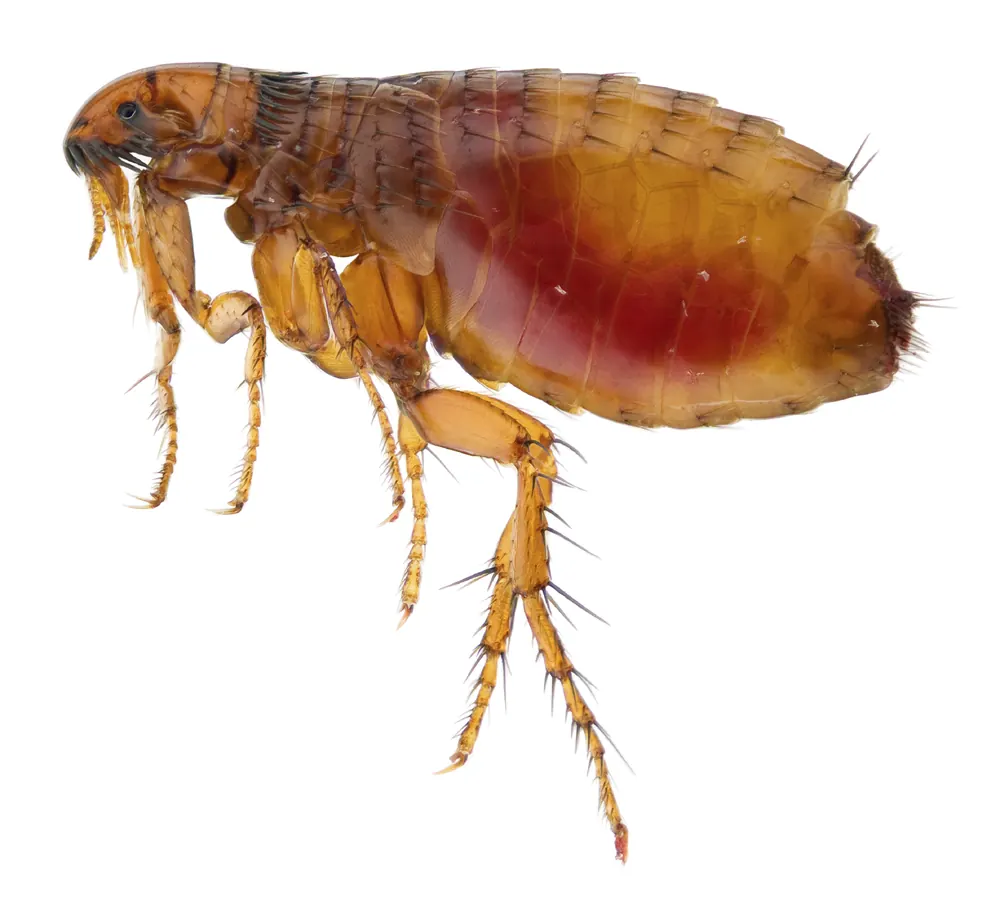
If you're getting bitten around the ankles in Despatch and your dogs won't stop scratching, it's almost certainly fleas. The fleas on your pets are only part of the problem. Most of the population lives as eggs, larvae and pupae in carpets, pet beds, under furniture and in the yard. That's why treating the pet alone often doesn't solve it, and why we treat the places fleas breed.
Why fleas do so well in Despatch
A lot of Despatch homes have a big yard and at least one dog, often more, plus cats that come and go. Pets that spend their day outside and come in at night carry fleas back and forth between the yard and the house. Fleas also come in on stray cats and other animals moving through the garden.
The yard is the reservoir. Fleas lay eggs on the animal, and those eggs fall off wherever the pet rests: the shady patch under a tree, the sand under the stoep, the kennel, the back of the car. In warm, humid weather the larvae develop quickly in those sheltered spots, and new fleas are waiting to jump onto the next pet or person walking past.
Signs of a flea problem
- Pets scratching, biting at their skin or losing fur, especially at the base of the tail
- Small, itchy red bites around your ankles and lower legs
- Tiny dark specks ("flea dirt") in your pet's coat or bedding that turn reddish on a damp tissue
- Fleas jumping onto white socks when you walk across the carpet
- Bites that start soon after moving into a house where pets used to live
How we treat fleas
Effective flea control has three parts happening at the same time.
Your pets
Your vet is the right person for this. Treat every dog and cat in the household, not just the one that scratches most, and keep it up. We'll time our visit so the pets are treated around the same day.
Your house
We treat carpets, rugs, under beds and couches, along skirting boards, pet beds and any other spots the animals use, with an odourless, non-staining residual treatment that keeps working on fleas as they hatch.
Your yard
This is the part most people skip. We treat the shaded, sheltered areas where pets lie and where flea larvae develop: under the stoep, kennels, beneath trees and hedges, the garage floor. Sunny lawns are far less important because larvae dry out there.
You don't need to leave the house. Children and pets can go back onto treated carpets once they've dried.
What to expect afterwards
For a week or two you may still see some fleas. That's normal. Pupae are protected inside their cocoons and only hatch when they sense movement and warmth, at which point they meet the treatment. Keep vacuuming every day during this time. The vibration encourages them to hatch, and the vacuum picks up eggs and larvae. Empty the vacuum outside afterwards.
The mistake that keeps fleas going
Using a flea bomb in the lounge and nothing else. Foggers don't reach under furniture or deep into carpets well, they don't touch the yard, and they don't help if the pets aren't treated at the same time. Within a few weeks the fleas are back, and people assume the product didn't work.
A Despatch tip
Find your dog's favourite lying spots in the yard and change them. Rake the sand, cut back overhanging branches to let sunlight in, and if there's a kennel, wash the bedding weekly on a hot cycle. Flea larvae need shade and moisture. Take those away from the places your pets rest, and the yard stops reinfesting the house.
What does flea control cost?
It depends on the size of the house, how much of the yard needs treating, how many pets you have and how heavy the infestation is. A house with one dog and a mild problem is a fairly simple job. A home with several dogs, cats and a large yard takes more time. A follow-up is sometimes needed for heavy infestations. If you've caught it early, regular pet treatment from your vet plus good vacuuming might be enough, and we'll say so.
More reading
If you're not sure fleas are the culprit, see our page on biting insects in Despatch, which also covers bird mites and mosquitoes. Bites in a line in the morning could point to bed bugs in Despatch instead. For other areas, see flea treatment in Port Elizabeth and flea control in Bluewater Bay.
Call 087 012 5550 to book, or WhatsApp us and tell us how many pets you have and where they sleep. That helps us plan the treatment.
Questions we get asked
Do you treat the pets themselves?
No. Pets should be treated by your vet with a suitable product. We treat the house and yard at the same time so the whole cycle is broken.
Why do I still see fleas after the treatment?
New fleas hatch from protected pupae for a week or two. They meet the treatment as they emerge, so numbers drop quickly. Keep vacuuming daily.
Do I need to treat the yard?
On most Despatch properties, yes. Shaded spots where pets lie hold eggs and larvae that keep reinfesting pets and the house.
Is the flea treatment safe for my dogs?
Yes, once it's dry. Keep pets off treated areas until then and we'll tell you when it's fine to let them back.
Can fleas live without pets in the house?
For a while, yes. Pupae can wait in carpets until someone moves in, which is why new tenants sometimes get bitten in an empty house.
How do I check my pet for fleas?
Part the fur near the base of the tail and look for dark specks. Put them on a damp white tissue; if they turn reddish, it's flea dirt.