
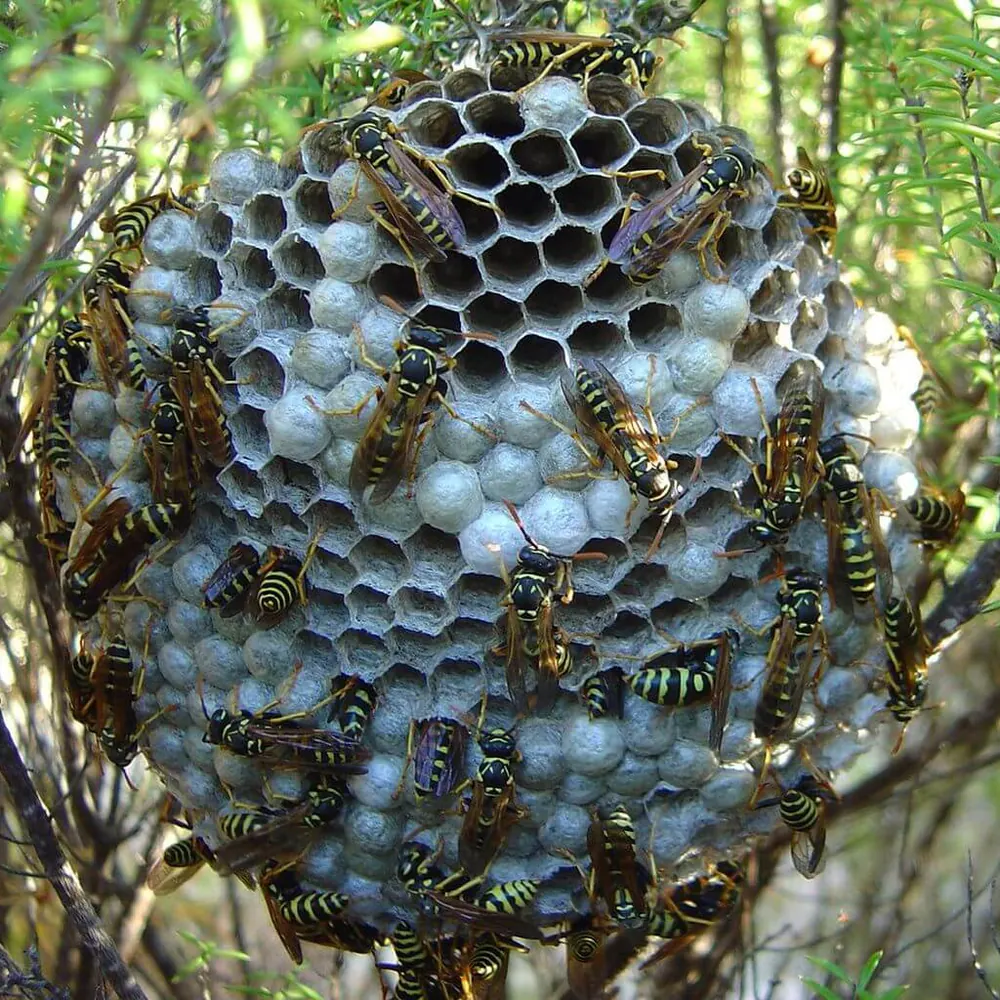
With wasps, the nest is everything. A few wasps flying around the garden are part of normal life; a nest beside the front door, over the pool or in the eaves above a child's window is a different matter. The safest way to deal with an active nest is to treat it directly, at the right time of day, with the right protection, and then remove it. This guide explains how wasps live, which ones you're likely to meet and why so many home attempts end with someone getting stung.
Which wasps build near houses?
Paper wasps
The most common nesting wasp around South African homes. They're slender, with long dangling legs in flight, often yellow-and-brown or reddish. Their nests are grey, papery and look like an upside-down umbrella of open cells, hanging from a single short stalk. You'll find them under eaves, gutters, carports, window frames, braai covers, roof overhangs, garden umbrellas and inside unused pipes and letterboxes.
Mud daubers
Solitary wasps with a very thin waist that build small tubes or lumps of mud on walls, ceilings and in sheltered corners. They rarely sting people and don't defend their nests the way paper wasps do. Usually they're best left alone or the mud cells scraped off once empty.
Not wasps at all
Bees are hairier, rounder and more golden-brown, and they build wax combs rather than paper nests. A bee swarm in a wall or roof needs a different approach. Bees matter as pollinators, and a beekeeper may be able to remove a swarm. If you're unsure which you have, send us a photo before anyone touches it.
How a paper wasp colony grows
In spring, a single founding female, or a small group, starts a new nest from chewed plant fibre mixed with saliva. At first it's the size of a coin, with a handful of cells. As the first workers hatch, they take over building and foraging, and the nest grows through summer. By the warm months, a colony that was tiny in September can be a sizeable nest with many defending wasps. Towards the end of the season the colony winds down.
The lesson: an early nest is easy to deal with. The same nest a few months later is a real job.
Why wasps sting
Wasps sting to defend the nest. A wasp foraging on your juice or braai meat is more likely to fly off than sting unless it's trapped or swatted. Near the nest, things change. Vibration, shadows, a hose spray or someone brushing a branch can bring several wasps out at once. Unlike honeybees, wasps can sting more than once.
For most people a sting is painful and swollen for a day or two. For anyone allergic, a sting can cause a severe reaction. Difficulty breathing, swelling of the face or throat, or dizziness after a sting needs emergency medical help immediately.
Why DIY wasp removal goes wrong
- Treating in the middle of the day. Many of the wasps are out foraging, return to a disturbed nest, and are at their most active and defensive.
- Working from a ladder. A cloud of wasps around your head while you're up a ladder is how falls happen.
- Knocking the nest down with a broom. The wasps don't leave; they attack and often rebuild nearby.
- Burning or hosing. Fire under the eaves is a serious fire risk, and water just makes them angry.
- Leaving the nest after spraying. Survivors returning to an intact nest may carry on.
To be fair, a very small new nest in early spring, at a height you can reach safely, can be dealt with by a careful adult in the evening using a wasp spray from a hardware store. If it's high, big, inside a cavity or anyone in the house is allergic, leave it to us.
What professional wasp control involves
- Identify and locate. We confirm it's wasps, not bees, and find every active nest around the property. There's often more than one.
- Plan the approach. Treatment is usually done early or late in the day when most of the colony is home and calmer, using protective gear.
- Treat the nest directly with a targeted product applied into the cells, not sprayed broadly around the garden.
- Remove the nest once the colony is dead, so returning wasps have nothing to come back to.
- Advise on spots likely to be used again, such as eaves and roof gaps, and on checking them early next spring.
For our local service, see wasp nest removal in Port Elizabeth. Beachfront flats and student houses have plenty of balconies and eaves for nests; our page on wasps around Summerstrand homes and flats covers that. Inland, where summers run hotter and drier than on the coast, our Kariega wasp control page has more. Wasps are one part of our wider guide to flying insects.
Prevention
Walk around the house once a month from early spring with a torch, checking under eaves, gutters, carports, window frames and garden furniture for small new nests. Seal gaps in fascia boards and roof edges where paper wasps like to start. Keep bins closed and don't leave sweet drinks and meat uncovered outdoors in summer. Cover the ends of open pipes and poles.
What does it cost?
The number of nests, how big they are, how high or hard to reach, and whether they're inside a cavity all affect the price. A single nest under a low carport is a quick job; several large nests under a double-storey roofline take longer. Businesses with outdoor seating sometimes put wasp checks on a seasonal schedule. We'll quote once we know what we're facing.
Found a nest? Keep people and pets away from it, then WhatsApp us a photo or call Pest Arrest on 087 012 5550.
Questions we get asked
When is the best time to remove a wasp nest?
Early in spring, while the nest is still small. On the day, early morning or evening is safest, when most of the colony is home and calmer.
Will wasps come back to the same spot?
They often build in similar sheltered spots, but a removed nest isn't reused. Checking the same eaves and corners early each spring catches new ones small.
Is it a wasp or a bee?
Wasps are smooth and slender with a narrow waist and build grey paper nests. Bees are hairier and rounder and build wax combs. Send us a photo if you're unsure.
What should I do if I'm stung?
Move away from the nest, wash the sting and use a cold compress. If you have trouble breathing or swelling of the face or throat, get emergency medical help immediately.
Can I spray a wasp nest myself?
A very small, low nest can be handled carefully in the evening. If it's large, high up, inside a wall or anyone in the house is allergic, call a professional.