
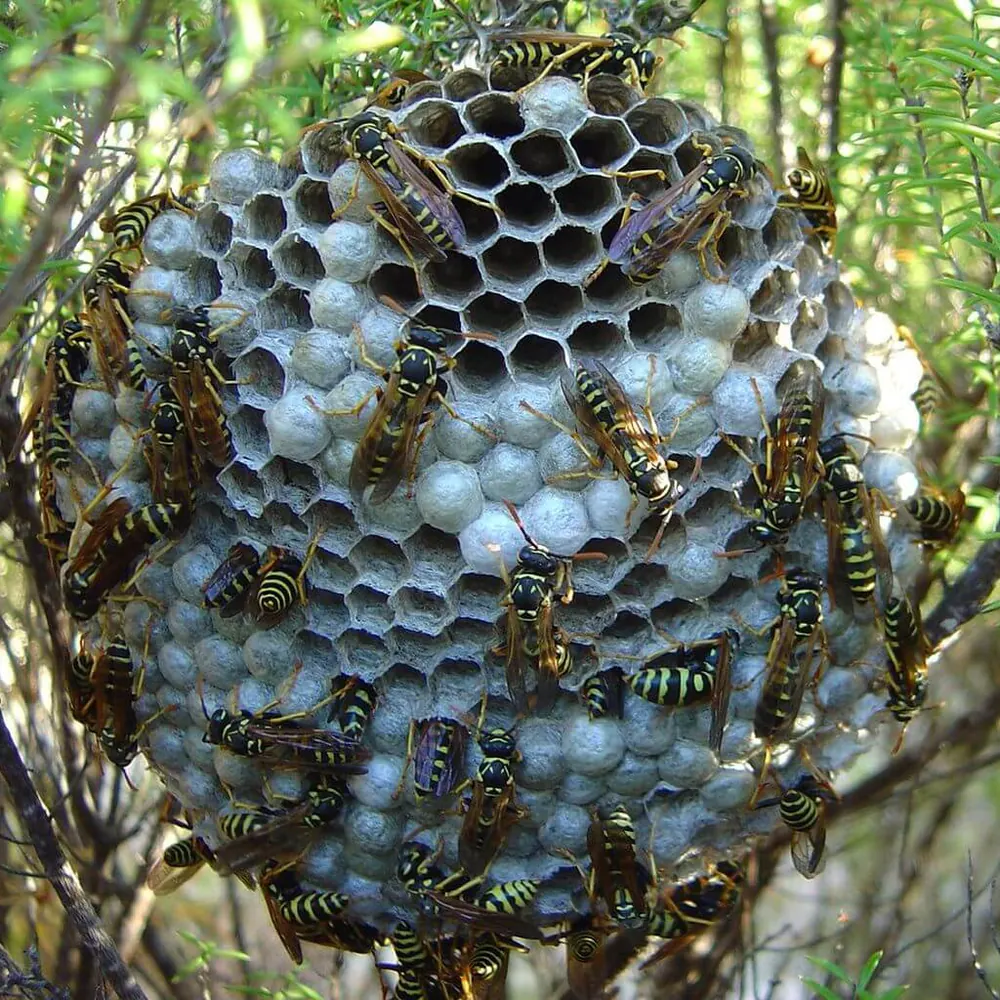
A wasp nest that's next to a door, a window, the pool gate or a path where children play should be removed, and it's a job best left to someone with the right protective gear and products. A small nest high in a tree on the far side of the garden, where nobody goes, can often be left alone. Telling the two apart is the first thing we help Walmer homeowners with.
The wasps you'll see in Walmer
- Paper wasps. Slim, yellow-and-brown or reddish wasps with dangling legs in flight. They build open, umbrella-shaped grey paper nests with the cells visible underneath, hanging from a short stalk. These cause most of the stings around homes.
- Mud daubers. Very slender, with a thread-thin waist. They build small tubes or lumps of mud on walls, under eaves and inside garages. They rarely sting people and usually don't need treating.
If what you're seeing is a big swarm or a busy hole in a wall with fuzzy insects going in and out, it may be bees, not wasps. Bees are valuable and should be moved by a beekeeper where possible. Send us a photo and we'll tell you which it is.
Why Walmer homes attract nests
Paper wasps want a sheltered, dry spot with food and water nearby. Many older Walmer houses have deep, overhanging eaves and wide verandas that keep the rain off, which suits them perfectly. Gardens add more options: pergolas covered in creepers, dense hedges, the underside of carports, shutters and the frames of garden gates.
Water matters too. Wasps need it to cool the nest and to mix the wood pulp they build with. A pool, a pond or a dripping garden tap gives them a supply all summer, which is why so many Walmer families notice wasps hovering at the pool's edge and then find a nest close by.
How we remove wasp nests
- We find every nest. Where there's one, there are often a few more under the same eave or in the same hedge.
- We treat the nest directly with a targeted product, wearing protective gear. Timing matters; wasps are calmer and all home in the early morning or late afternoon.
- We remove the nest once the wasps are dead, so returning wasps don't rebuild on the same spot.
- We treat common nesting surfaces under eaves where it helps to discourage new nests.
Keep children and pets indoors while we're working, and off any treated surfaces until they've dried. Normal life carries on after that.
The local tip: walk the eaves in spring
Paper wasp queens start new nests in spring, and at first a nest is no bigger than a thimble with one wasp on it. Walk around the house every couple of weeks from early spring, looking up under the eaves, the veranda roof and the pergola. A tiny new nest can be knocked down with a long broom handle at dusk, before it becomes a colony. In a big Walmer home with long eaves, this habit saves a lot of trouble later in the season.
What people get wrong
Spraying a nest from close up with a household insect spray in the middle of the day. The spray rarely kills every wasp, and the ones that survive are angry and in the air, often right next to a ladder. Hosing the nest or knocking down a large one with a stick has the same result. If the nest is bigger than a golf ball, out of reach or near people, get it done professionally.
If someone is stung
Most wasp stings cause pain and swelling that settles within a day or two. Wash the area and use a cold compress. If the person has trouble breathing, swelling of the face or throat, or feels faint, get medical help immediately; that can be an allergic reaction. If anyone in your home is allergic, that's a good reason not to tolerate any nest near the house.
What does it cost?
It depends on how many nests there are, how high and how hard they are to reach, and whether there's other work on the same visit. One nest under a low eave is quick. Several nests in a tall hedge or under a double-storey roofline take more time and equipment. A tiny new nest that you can reach safely, you can remove yourself. We quote once we know what's there.
Read about wasp life cycles and nest building in our wasp control guide, or see the wasp nest service for Port Elizabeth. We also handle wasp nests in Summerstrand. For flies and mosquitoes around the pool, see flying insect control in Walmer, and for anything else our Walmer pest control overview. Call 087 012 5550, or WhatsApp us a photo of the nest.
Questions we get asked
Should I remove a wasp nest myself?
Only if it's very small, newly started and easy to reach. Larger nests, high nests or nests near people are safer to have treated professionally.
Will wasps come back to the same spot?
They can. Removing the old nest and treating the surface helps, and checking the eaves in spring stops new ones getting established.
Why are there so many wasps around my pool?
Wasps collect water to cool their nests and build with. A pool is a reliable supply, so there's often a nest somewhere nearby.
Do you remove bees?
Bees are best moved by a beekeeper. If you're not sure whether you have bees or wasps, send us a photo and we'll tell you.
Are mud wasps dangerous?
Rarely. Mud daubers seldom sting people, and their small mud nests usually don't need treating unless they're in an awkward place.