
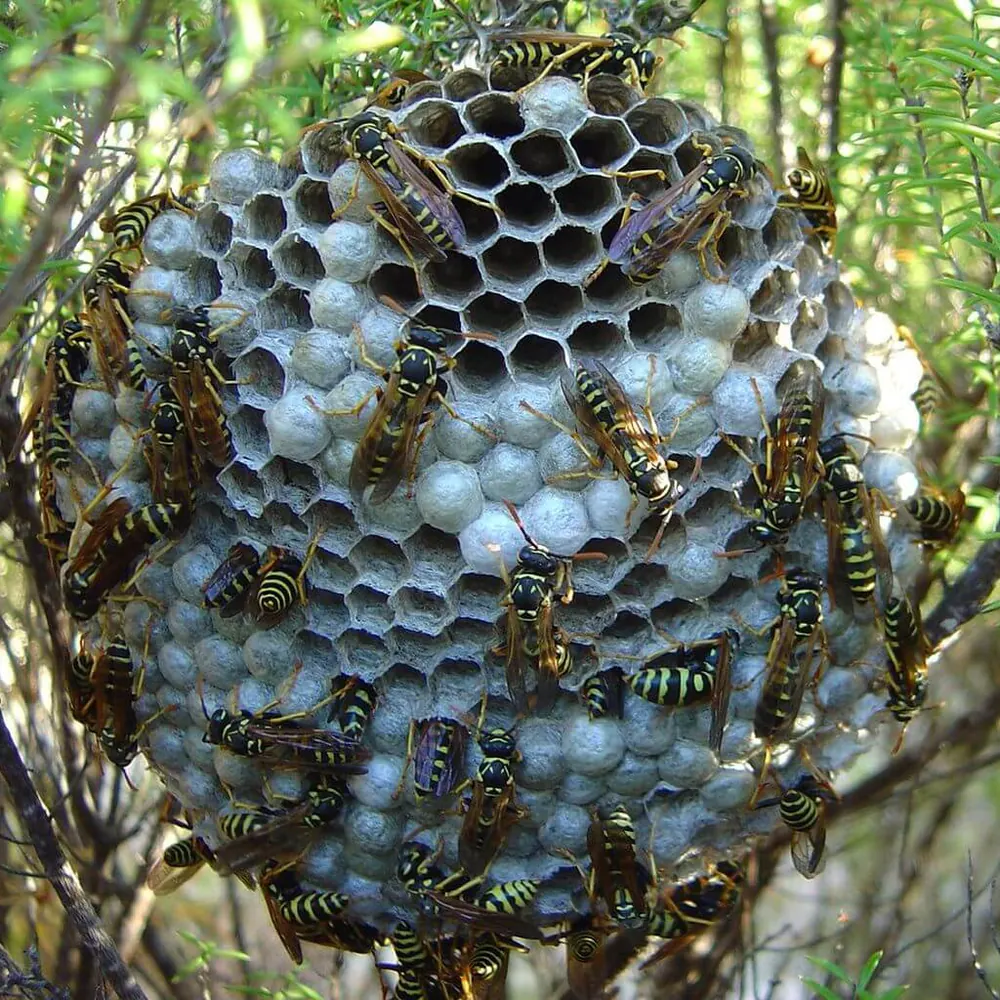
If wasps are building under your eaves, in your carport or above a factory door in Kariega, the safest step is to leave the nest alone and have it treated properly. Knocking a nest down with a broom usually ends with stings, and the wasps often rebuild nearby. A targeted treatment, done at the right time of day, kills the colony in the nest, after which the nest can be removed.
Why Kariega gets so many wasp nests
Paper wasps love warmth. Kariega's hot, dry summers, which start earlier and last longer than on the coast, give colonies a long season to grow. A nest that starts as a few cells in spring can be a large, busy nest by midsummer. Wasps also need water, both to drink and to cool their nests on hot days, so in a dry town, swimming pools, dripping aircon units, garden taps and pet bowls draw them close to houses.
Where we find nests
Around homes
- Under eaves and the overhang of roofs, especially on the sheltered side of the house
- Inside carports and garages, on beams and under the roof sheeting
- Behind shutters, burglar bars and gate motors
- In the roof space, entering through a gap in the fascia
- Under outdoor furniture, braai areas and on garden walls
On industrial sites
Factories and warehouses have long canopies over loading bays, steel roof trusses, signage, gutters and covered walkways, all ideal for paper wasps. In a busy loading bay, a wasp nest above a door where forklift drivers and delivery staff walk all day is a real safety issue, particularly for anyone allergic to stings.
How we treat wasp nests
- Inspect. We find the nest, check how big it is and whether there are others nearby, which is common.
- Treat at the right time. Where possible we treat early or late in the day, when most wasps are back on the nest.
- Direct nest treatment. The product is applied directly to the nest, killing the colony.
- Remove the nest once the wasps are dead, so it doesn't attract new ones or other pests.
- Residual treatment of favourite nesting spots where it helps prevent a rebuild.
You don't need to leave home, but keep everyone, especially children and pets, well away while we work and off treated surfaces until dry.
Signs of a nest you haven't seen
Wasps flying in and out of the same spot, often a gap in the fascia, a pipe opening or behind a shutter, usually means a hidden nest. Wasps repeatedly visiting a pool or tap and flying off in the same direction are heading home. Follow the line from a safe distance and you'll often find the nest.
A tip for Kariega summers
Do a walk around the house in early spring, before the heat sets in, and look under eaves, in the carport and behind shutters. Spring nests are small, with only one queen and a handful of cells. Spotting them early, when they're easy to deal with, prevents a big summer nest over the back door.
The mistake that gets people stung
Spraying a nest with a household aerosol from close range, or trying to knock it down with a hose or broom. Paper wasps defend their nests, and an angry colony will sting anyone nearby. Many people get stung on ladders, which can mean a fall as well. If you're allergic to stings, don't try at all.
Wasps, bees or something else?
Paper wasps have long legs that dangle in flight and build open, umbrella-like grey paper nests. Honeybees are furrier and live in hives or cavities. We treat wasps. If you've got a swarm or a hive of bees, that's a job for a beekeeper who can relocate it, and we'll tell you so.
What does it cost?
It depends on how many nests there are, how big they are and how hard they are to reach. A small nest under a low eave is quick. Several nests along a factory canopy or inside a roof space take longer. Industrial sites often include wasp checks in their regular service during summer. We'll quote once we know what's there.
Flies are the other big summer nuisance; see our page on fly control in Kariega, or our full list of Kariega pest services. Our wasp guide explains how colonies develop. We also remove wasp nests across Port Elizabeth and treat wasps in Despatch.
Call 087 012 5550, or WhatsApp us a photo of the nest from a safe distance.
Questions we get asked
Is it safe to remove a wasp nest myself?
Small, early nests can be, but larger ones are risky. Wasps defend their nests, and stings on a ladder can cause falls. If you're allergic, don't try.
Will wasps come back after the nest is removed?
They may try to rebuild in the same spot. Removing the nest and treating the area reduces the chance.
Do you remove bee hives?
No. Bees should be relocated by a beekeeper. We treat wasps, and we'll tell you if you're dealing with bees instead.
Why do wasps visit my pool?
They collect water to drink and to cool their nests on hot days, which is common in Kariega's summer heat.
Can you treat wasp nests on a factory canopy?
Yes. We treat nests on canopies, loading bays, trusses and signage, timed to avoid disrupting work.
When is the best time to deal with wasps?
Spring, when nests are small. A quick check under eaves and in carports then prevents a big nest later.