
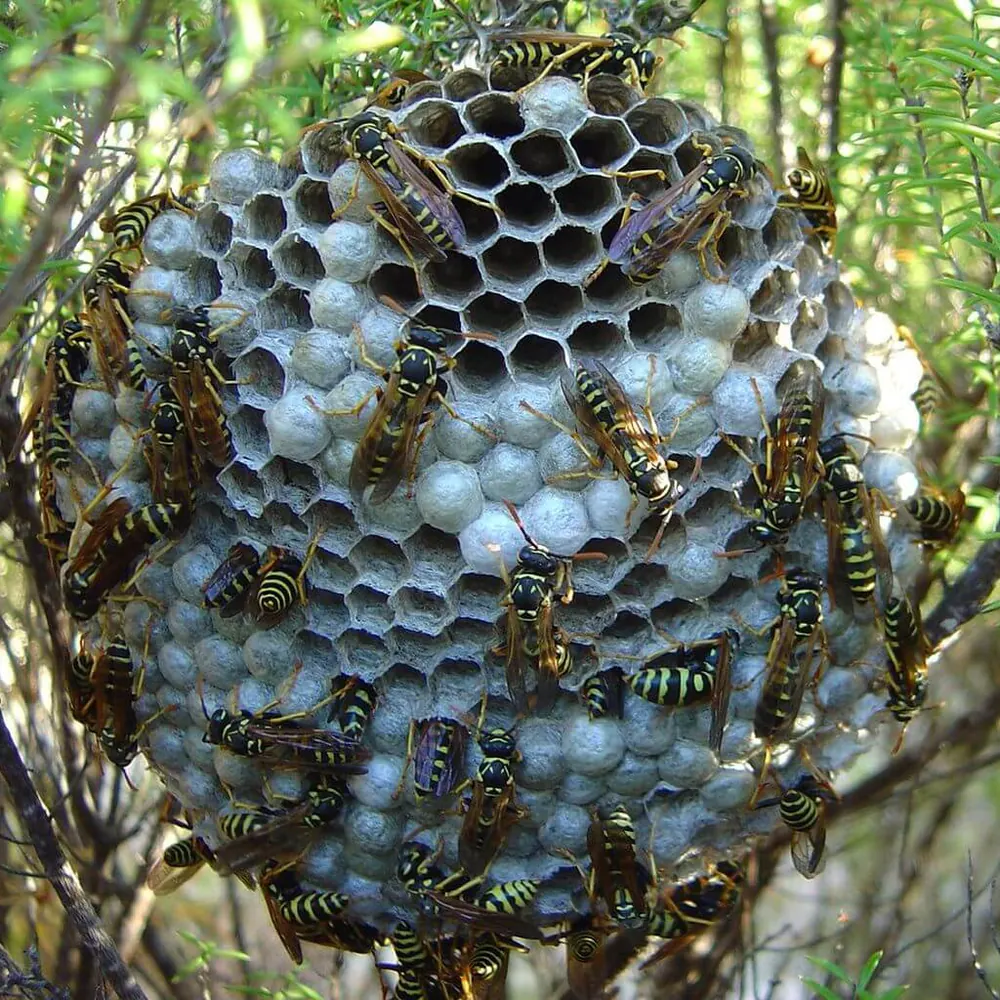
A wasp nest under the eaves of a Summerstrand house or tucked into a balcony corner is something to deal with carefully, not with a broomstick. We treat the nest directly, so the whole colony is dealt with, and then remove it where it can be reached safely.
Wasps hide from the wind
Paper wasps, the slender ones with dangling legs that build open, umbrella-shaped nests, are the ones we deal with most around Port Elizabeth. In a windy beach suburb like Summerstrand, they choose their nest sites carefully. You won't often find a nest on an exposed wall facing the sea. Instead they go for the sheltered side of the building and anywhere out of the wind:
- Under the eaves and roof overhangs on the protected side of the house
- Under balcony ceilings and inside covered patios
- Behind shutters and in the frames of windows that are seldom opened
- Inside the roof of a carport or garden shed
- Around the braai area, under pergolas and inside outdoor light fittings
- In the gutters of houses and student digs that don't get much maintenance
Those spots are also where people sit and spend time, which is why stings happen.
When they become a problem
Nests start small in spring with a single queen, and grow through summer. A nest the size of a coin is easy to deal with; by late summer the same nest can be the size of your hand and very defensive. Wasps also take more interest in sweet drinks and food later in the season, which brings them to outdoor tables at beachfront restaurants and to anyone with a cooldrink on the balcony.
How we deal with wasps
- Locate the nest. Sometimes it's obvious; sometimes we follow the flight path of wasps coming and going to find it tucked into a roof gap or shutter frame.
- Treat the nest directly with a targeted product, so the wasps on and in the nest, including those returning to it, are dealt with.
- Remove the nest once it's safe to do so, where it can be reached.
- Treat the surface around the nest site with a residual product to discourage wasps from rebuilding in the same spot.
Keep children and pets indoors while we work, and away from the treated area until it's dry.
For hotels, restaurants and body corporates
Wasps around outdoor seating at a restaurant or guesthouse are bad for business, and a sting to a guest with an allergy is a real risk. We can check the outside of the building, patio covers, umbrellas and signage for nests as part of a regular visit, so small nests are dealt with before they grow. For blocks of flats, nests under top-floor eaves often need proper access, which we plan for when we quote.
What people get wrong
Knocking the nest down with a broom or blasting it with the hosepipe. The nest may fall, but the wasps don't disappear; they turn on whoever is standing underneath, and the survivors often rebuild nearby. Spraying fly spray at close range has much the same effect. If the nest is bigger than a golf ball, or somewhere you can't reach comfortably, leave it to us.
A local tip
In spring, walk around the outside of your house and look up under the eaves, balcony ceilings and shutter frames on the sheltered side. Small new nests are easy to spot and easy to treat at that stage. That one walk can save you a much bigger problem by late summer.
Students and wasps
Student houses often have a nest or two that everyone has noticed and nobody has dealt with, usually in a gutter, over the back door or under the braai area roof. If you're the landlord, ask your tenants to tell you about nests early. A nest over a doorway that people use all day is far more likely to cause stings than one in a quiet corner.
Bees are different
If the insects are plump, hairy and gathered in a ball-shaped cluster, they may be honeybees rather than wasps. Tell us when you call, because bees are handled differently.
What does it cost?
It depends mainly on how many nests there are, how big they are and how hard they are to reach. A single small nest under a low eave is quick. Several nests across a block of flats, or a nest high in a roof gap that needs ladders and roof access, takes longer. A tiny new nest you can reach easily may be something you can handle yourself at dusk with a wasp product from the shop, and we'll be honest about that. We quote once we know where the nest is.
Read our wasp control guide for more on how wasps behave, or see wasp nest removal across Port Elizabeth. Other buzzing problems are on our page for flies and mosquitoes in Summerstrand, and gardens with more trees and nest sites are covered under wasps in Walmer. The Summerstrand pest page has the rest.
Call 087 012 5550, or WhatsApp us a photo of the nest and where it is.
Questions we get asked
Will the wasps come back to the same spot?
Sometimes, because the spot suits them. Treating the surface after removing the nest discourages them, and checking the area again in spring catches any new start early.
Is it safe to remove a wasp nest myself?
Only if it's very small, easy to reach and you're not allergic. Anything bigger than a golf ball, or high up, is better left to a professional.
What should I do if I'm stung by a wasp?
Wash the area and use a cold compress. If you have swelling of the face or throat, difficulty breathing or feel faint, get medical help immediately.
Can you remove a nest from a third-floor balcony?
Yes. We treat it from the balcony or from outside, depending on access, and plan for ladders or roof access where needed.
Why are wasps hanging around our restaurant tables?
Later in summer wasps look for sugar, and sweet drinks and food draw them. Finding and treating nests near the building cuts the numbers.