
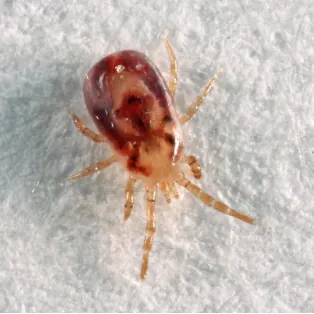
If you're getting itchy bites in Despatch and you can see tiny moving specks on walls, windowsills or the bed, and you know birds have been nesting in the roof or eaves, bird mites are a likely cause. They're tiny, they're stressful, but they're very treatable once the source is found. And in Despatch the source is usually one of two places: a wild bird's nest in the roof, or the backyard chicken coop.
What bird mites are
Bird mites are tiny, eight-legged parasites that live in birds' nests and feed on the birds' blood. They're barely visible to the eye, about the size of a full stop, pale or greyish until they've fed, when they turn reddish. They don't live on people. But when the birds leave the nest, usually when chicks fledge or a nest is abandoned, the mites go looking for a new host. If the nest is in your roof, gutter, eaves or air vent, that new host can be you.
Source one: wild birds in the roof
Pigeons, sparrows, starlings and mynas all nest in roofs and eaves. Many Despatch homes are older, family houses where years of wind and weather have opened small gaps at the eaves, under roof tiles and around fascia boards. Those gaps make perfect nest sites. Mites from these nests often come into the house through ceiling light fittings, cornices, air vents and gaps around windows.
Typical signs:
- Bites at night, often in bedrooms close to where the birds were nesting
- Tiny moving specks on white surfaces like windowsills, basins, pillowcases and walls
- Birds flying in and out of a gap in the roof, then going quiet
- Bird droppings and nesting material collecting below the eaves
Source two: the chicken coop
Many families in Despatch keep a few chickens, and smallholdings keep more. Poultry mites are a different kind of bird mite. Some live in the cracks and crevices of the coop during the day and come out at night to feed on the birds. They can bite the people who collect eggs or clean out the coop, and they can hitch a lift into the house on clothes. Signs include chickens looking pale or unwell, laying less, reluctant to go into the coop at night, and clusters of tiny grey or red mites in perches and nesting boxes.
How we treat bird mites
- Find the nest. We inspect the roof space, eaves, gutters and vents for nests, or look at the coop and nesting boxes.
- Treat the nest site. We treat the nest and surrounding area directly. Once the birds have gone, the nest is removed so it can't keep releasing mites.
- Treat the house. Affected rooms get a targeted treatment around windows, cornices, skirting, light fittings and beds, using an odourless, non-staining product.
- Advise on proofing. The gaps the birds used need closing, or they'll nest there again next season.
For coops, we treat the cracks, perches and nesting boxes where mites hide, and talk you through cleaning, fresh bedding and keeping the coop dry. Your vet can advise on treating the birds themselves.
The mistake that prolongs it
Removing the nest and doing nothing else, or blocking up the gap while the nest and mites are still inside. Pulling a nest out scatters the mites into the roof and ceiling. Sealing the gap with the nest still there traps the mites with no birds to feed on, so they come into the house looking for you. The nest and the area around it need to be treated properly first.
A local tip
Look up at your roof in spring. Wind and weather lift tiles over the years, and a lifted tile or a loose fascia board opens up a nest site within weeks. Fixing it before the birds move in is far easier than dealing with mites after the chicks fledge.
What does bird mite treatment cost?
It depends on where the nest is and how easy it is to reach, how many rooms the mites have spread into, and whether a coop needs treating too. A single nest at the eaves with mites in one bedroom is a fairly contained job. A large roof with several nests, or a house plus a mite-infested coop, takes longer.
Further reading
Our guide to bird mites explains the life cycle in more detail. If you're not sure the bites are from mites, compare them with the other possibilities on our page about insect bites in Despatch. For other areas, see bird mite treatment in Port Elizabeth and bird mites in Kariega.
Call 087 012 5550, or WhatsApp us a photo of the specks or the nest, and we'll tell you if bird mites are the likely cause.
Questions we get asked
Can bird mites live on people?
No. They bite people but can't complete their life cycle without birds, so once the nest is treated and removed, they die off.
Why did the bites start after the birds left?
That's when bird mites look for a new host. When chicks fledge or a nest is abandoned, the mites leave the nest and wander into the house.
Can I just pull the nest out myself?
It's better not to. Removing an untreated nest scatters mites into the roof and house. The nest and surrounding area need to be treated first.
Are chicken mites the same as bird mites in the roof?
They're related, but poultry mites live in the coop and feed on chickens. Both can bite people and both are treated at the source.
How do I stop birds nesting in my roof again?
Close the gaps they used, like lifted tiles, open eaves and loose fascia boards, once the nest has been treated and removed.