
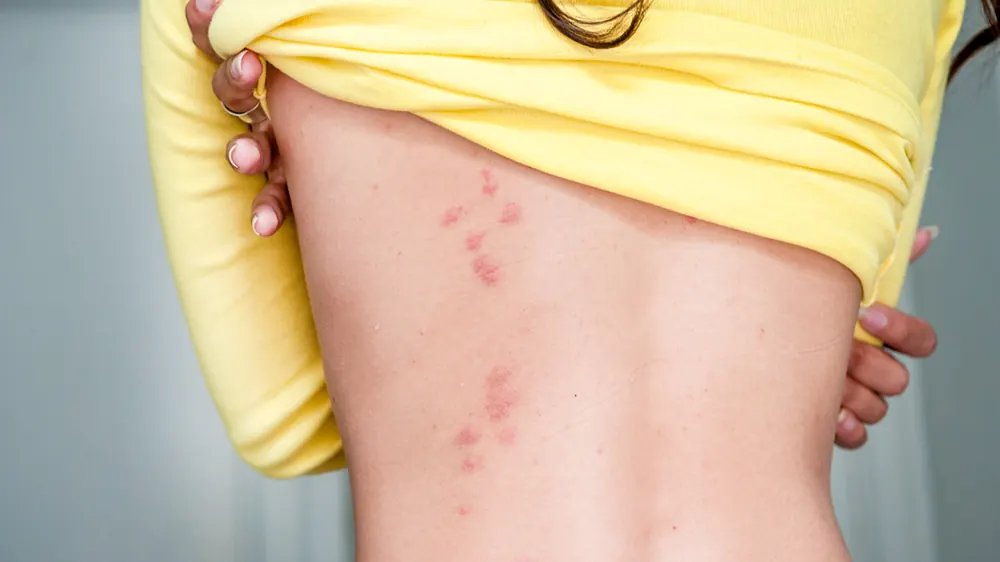
The first question with any bite problem is simple: what's biting you? In Despatch homes the answer is usually one of four things: fleas, mosquitoes, bed bugs or bird mites. Each one lives somewhere different and needs a different treatment, so spraying the bedroom and hoping for the best rarely works. We start by working out the culprit, then we treat where it lives.
Reading the bites
Bites on their own can't confirm anything, but where and when they happen narrows it down a lot.
Bites around the ankles and lower legs
Usually fleas. They jump up from carpets, rugs, pet beds and the yard. In Despatch, with so many dogs and cats spending time outside, this is the most common bite call we get. If your pets are scratching too, it's almost certainly fleas.
Bites in a line or cluster, found in the morning
This pattern points to bed bugs, especially on the arms, neck and shoulders. Look for tiny dark spots on the mattress seams and the headboard. Bed bugs aren't a sign of a dirty house. They travel in luggage and second-hand furniture.
Itchy bites with no visible insect, near a ceiling or window
Bird mites. If pigeons, sparrows or mynas have nested in your roof, eaves or gutter, the mites can come into the house once the chicks leave the nest. If you keep chickens, poultry mites can cause a similar problem in the backyard and on whoever collects the eggs.
Bites on exposed skin in the evening
Mosquitoes, nearly always. They breed in standing water, and in a Despatch yard there are plenty of candidates.
How we treat each one
- Fleas: residual treatment of carpets, pet sleeping areas, under furniture and the shaded parts of the yard where pets lie. Pets need to be treated by your vet at the same time.
- Bed bugs: a thorough treatment of mattresses, bed bases, headboards, skirting and furniture near the bed, followed up to catch hatching eggs.
- Bird mites: we find and treat the nest, then treat the rooms where the mites have spread. Without dealing with the nest, they keep coming.
- Mosquitoes: finding and removing breeding water first, then treating the shady spots where adult mosquitoes rest.
You don't need to leave your home for any of these. Just keep the kids and the dogs out of treated rooms until everything has dried.
Why Despatch homes get more flea and mite calls
It comes down to how people live here. Bigger yards mean dogs live outdoors and come inside, carrying fleas with them. Smallholdings and backyard chicken runs bring poultry mites into the picture. Older roofs with gaps at the eaves are inviting for nesting birds. None of this is unusual, but it means biting insects in Despatch often start outside and end up in the house.
What people commonly get wrong
Treating the house for fleas while the dog sleeps under the stoep every day. Flea eggs and larvae build up in the soil and dust where the pet rests, and the pet brings a fresh batch inside. Equally, people treat themselves for bites for weeks without checking the roof for a bird's nest. The fix is always at the source.
When bites need more than a pest controller
Most insect bites are just itchy and irritating, but keep an eye on them. If a bite becomes swollen, hot and painful, starts weeping, or someone in the family has a strong reaction, see a doctor or clinic. Scratching flea and mosquito bites, especially on children, can let infection in. We sort out the insects; your doctor sorts out the bites.
A local tip
If your dogs lie in one sandy, shaded spot in the yard, rake it, keep it dry and let some sun in by cutting back overhanging shrubs. Flea larvae need shade and moisture to develop. Take that away and you take away the nursery.
What does it cost?
That depends on which insect it is and how far it's spread. A flea treatment for a house and a section of yard is a fairly standard job. Bed bugs take more time because every hiding spot has to be treated and a follow-up is normally needed. Bird mites depend on how easy the nest is to reach. If it turns out to be mosquitoes from a bucket of water, we'll tell you that you can sort it out yourself.
Where to go next
For the full picture on each pest, see flea treatment for Despatch homes and pets, bed bug removal in Despatch and bird mites coming in from the roof. Our guide to biting insects explains how they feed and breed, and you can read about biting insect treatment across Port Elizabeth too.
Call 087 012 5550, or WhatsApp us a photo of the bites and anything you've found in the bed or on the pets, and we'll help you narrow it down.
Questions we get asked
Can you tell what's biting me from a photo of the bites?
Not with certainty, but it helps. Combined with where and when you're being bitten, and a photo of anything you've caught, we can usually narrow it down.
My pets are treated for fleas but we still get bitten. Why?
The yard and house are still full of flea eggs and larvae. Those hatch over the next weeks and jump onto people and pets until the environment is treated.
Can chicken mites bite people?
Yes. Poultry mites can bite people who handle the birds or work in the run, although they can't live on people for long.
Do bed bugs mean my house is dirty?
No. Bed bugs travel in luggage, bags and second-hand furniture and turn up in very clean homes.
How long before the biting stops?
It depends on the pest. Fleas can carry on for a short while as eggs hatch, which is why some jobs need a follow-up. Mites usually stop once the nest is dealt with.