
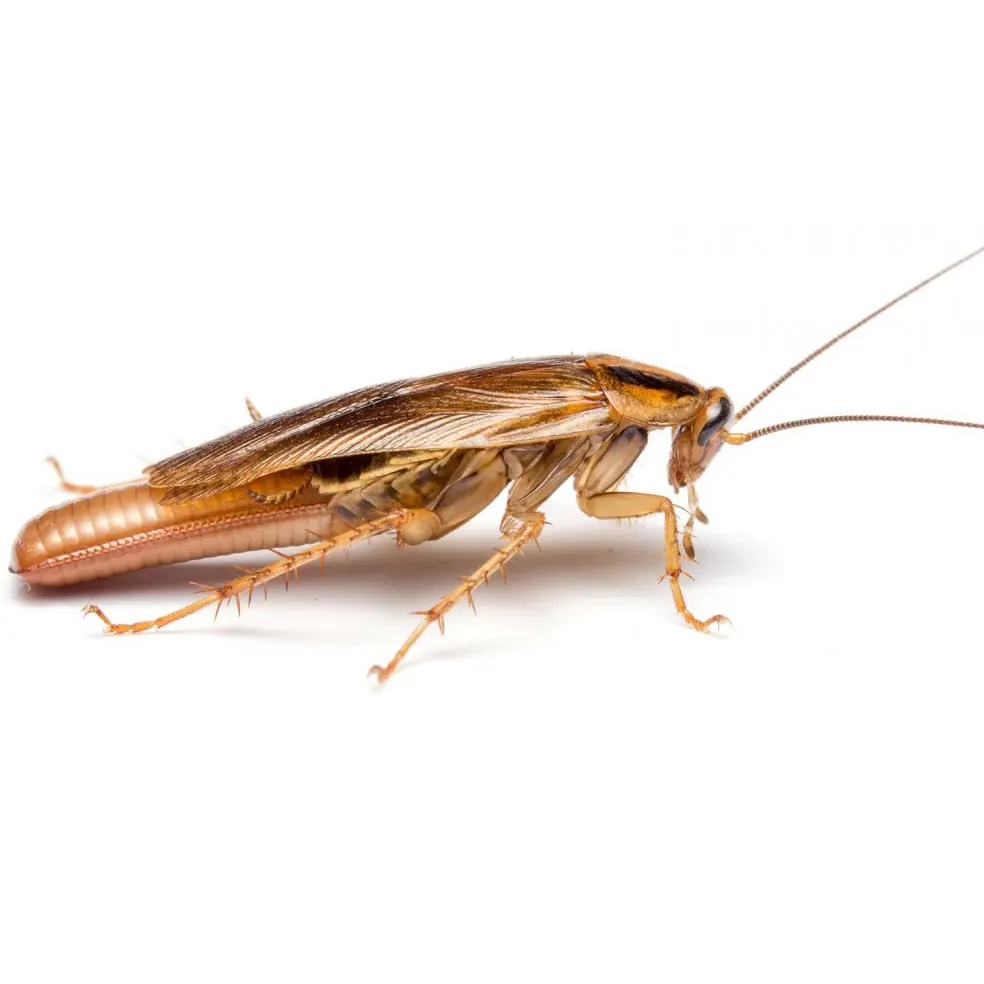
Cockroaches in a Kariega kitchen are almost always one of two kinds, and you can usually tell which by where you see them. Small, light brown ones darting into cracks when you open a cupboard are German cockroaches, and they're breeding inside. Big, reddish-brown ones on the bathroom floor or near a drain on a hot night are American cockroaches, and they've come in from outside. Both are treatable, but not with the same method.
The canteen problem
Kariega's factories, especially those connected to the automotive plant and its suppliers, feed a lot of people. Many staff canteens prepare food across several shifts, so the kitchen is warm, busy and never fully shut down. That's ideal for German cockroaches. They live in the motor housings of fridges and cold rooms, under urns and bain-maries, inside dishwasher panels, behind wall-mounted equipment and in the gaps of stainless-steel counters. Cleaning crews do their best, but the insects are inside the equipment, not on the surface.
Spraying a canteen kitchen is limited by food safety and by the fact that the space is almost always in use. So we rely on gel baits placed precisely into the cracks and voids the cockroaches use, applied between services, plus sticky monitors so we can see whether numbers are dropping. On a scheduled contract we check every visit, adjust placements and record what we've found, which helps with food safety audits and client inspections.
Kitchens in Kariega homes
At home, German cockroaches often arrive in grocery boxes, second-hand appliances or furniture, and settle behind the fridge, under the stove and in the cupboard under the sink. Older kitchens, with gaps between units and walls and old tiles coming loose, give them more places to hide.
American cockroaches are an outdoor species. They live in drains, sewers, compost and garden rubble, and come inside through floor drains, gaps under doors and open windows. They're most noticeable on warm, still nights, and Kariega's long, hot summers give them plenty of those.
Signs you've got cockroaches
- Live cockroaches running when a light goes on at night
- Small black droppings, like coffee grounds, in drawers and on hinges
- Brown, purse-shaped egg cases stuck in corners
- A musty, oily smell in cupboards or behind appliances
- Shed skins near the back of shelves
How we clear them
- Inspection. We pull out what can be moved and check appliance housings, under sinks, behind units, in drains and around the geyser cupboard.
- Gel baiting. Bait goes into cracks and crevices where German cockroaches shelter. They feed, return to the harbourage, and the bait spreads through the population.
- Drains and outside. For American cockroaches we treat drains, manholes and the outside of the building with an odourless, non-staining residual spray.
- Follow-up. Eggs inside their protective cases survive the first treatment, so we come back to catch the next hatch.
Gel baiting means you can carry on using your kitchen. If we spray, keep children and pets off those areas until they've dried.
A tip for the hot months
Put a plug or a drain cover on floor drains at night, especially in bathrooms and laundries that aren't used much. In a Kariega summer, a dry floor drain with no water in the trap is an open door for American cockroaches coming up from the sewer. Pouring a jug of water into rarely used drains once a week keeps the trap sealed.
What goes wrong with DIY
Mixing sprays and baits. People put down bait and then spray over it, or spray the kitchen the day before a professional baiting. The spray repels cockroaches from the bait and contaminates it, so they never eat it. If you've booked a gel treatment, leave the spray can in the cupboard.
What does it cost?
The size of the kitchen or building, the species, how heavy the infestation is and whether a follow-up is needed all affect the price. A home with a few American cockroaches coming in from the drain is a simpler job than a canteen with German cockroaches inside the equipment. Commercial kitchens are best on a monthly contract. We'll quote once we've seen it.
Ants often show up in the same kitchens, especially in summer; see ant treatments in Kariega, or look at our overview of Kariega's main pests. For background on the species, read the full cockroach guide. We also treat cockroaches throughout Port Elizabeth and in Despatch kitchens and homes.
Call 087 012 5550 to book, or WhatsApp us a photo and we'll tell you which cockroach you've got.
Questions we get asked
Can you treat our canteen without closing it?
Yes. Gel baiting is done between services and doesn't require the kitchen to close. We plan visits around your shifts.
Why do I see more cockroaches after treatment?
The bait draws them out of hiding for a few days. Numbers should drop clearly after that.
Where do the big cockroaches come from?
American cockroaches come from drains, sewers and outdoor rubble. They enter through floor drains and gaps under doors.
Are gel baits safe in a food kitchen?
Yes. They're placed in cracks and voids, away from food contact surfaces, and are designed for use in kitchens.
How long does it take to clear German cockroaches?
Most homes see a sharp drop in one to two weeks. Commercial kitchens take longer and benefit from ongoing monitoring.
Do you provide records for food safety audits?
Yes. On a contract, every visit is recorded with findings, treatments and recommendations.