
To get rid of cockroaches for good, you have to reach the ones you never see: the colony packed into cracks behind the stove, inside the fridge motor housing and under the kitchen units. Bait placed where they live and feed, a follow-up to catch the next hatching, and fixing the moisture and food that keep them going. That's the formula. The rest of this guide explains why it works when sprays alone so often don't.
Which cockroach is it?
Identification matters because the two common species are treated in different ways.
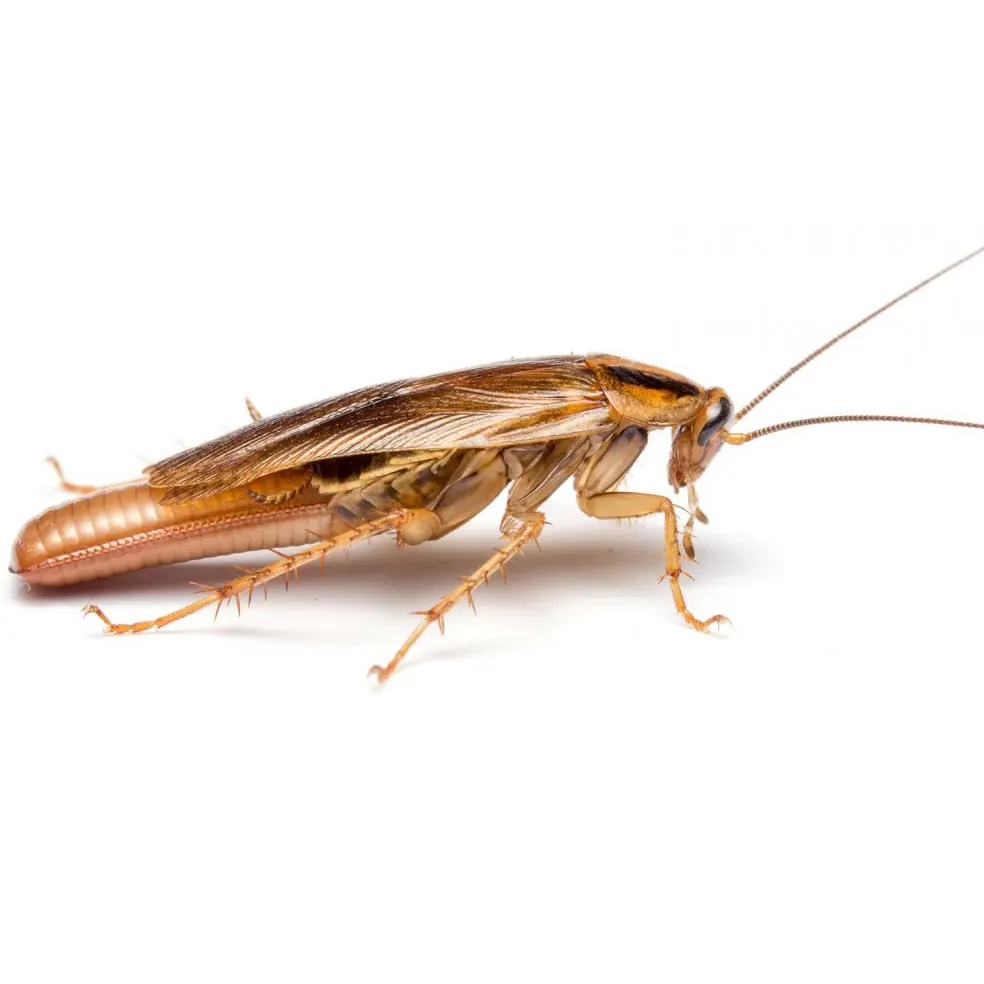
- German cockroach. Small, roughly the length of a fingernail, light tan with two dark stripes behind the head. It lives indoors, close to warmth, food and water: kitchens, bathrooms, restaurants, flats and food factories. This is the species behind most serious indoor infestations.
- American cockroach. Large, reddish-brown, with a pale band behind the head, and able to fly short distances in warm weather. It lives in drains, sewers, manholes, garden debris and basements, and wanders indoors at night, often through floor drains.
If you only ever see a big one now and then near a drain or after rain, you probably have American cockroaches coming in from outside. If you see small ones in the kitchen, especially in daytime, you probably have a German cockroach population living in the building.
The life cycle that makes them hard to kill
A female German cockroach carries her eggs in a protective case, called an ootheca, attached to her body until shortly before they hatch. That case shields the eggs from most sprays. The young, called nymphs, look like small wingless adults and grow by moulting several times. In a warm kitchen, the whole cycle runs quickly, and generations overlap, so at any time you have eggs, nymphs and adults living together.
American cockroaches drop their egg cases in sheltered spots near food. Their development is slower, but adults live a long time.
The practical result: one treatment rarely catches every stage. Planning for a follow-up is part of doing it properly.
Where they hide
Cockroaches like to feel surfaces on their backs and bellies at the same time, which is why they squeeze into tight cracks. Typical spots include:
- Behind and under the fridge, stove and dishwasher, and inside motor housings
- Hinges and corners of kitchen cupboards
- Gaps where the countertop meets the wall, and under sink units around pipes
- Inside microwaves, kettle bases, toasters and coffee machines
- Electrical boxes and conduit, and pipe ducts in blocks of flats
- Floor drains, manholes and sewer connections for American cockroaches
Health risks
Cockroaches walk through drains and rubbish and then across counters and food, spreading bacteria such as salmonella. Their droppings, shed skins and saliva contain allergens that are a recognised trigger for asthma, particularly in children. For food businesses, cockroaches are a serious hygiene and inspection issue.
Why DIY cockroach control usually stalls
- Spraying where you see them. Contact sprays kill exposed cockroaches but miss the colony in the walls, and German cockroaches may scatter into new areas.
- Mixing spray and bait. Spraying around bait contaminates it, and cockroaches avoid it.
- Foggers and bombs. The mist settles on open surfaces, not deep in cracks where the colony lives, and leaves a residue on everything.
- Stopping too soon. Numbers drop after a week, people relax, and the eggs that were protected hatch into a new wave.
- Using the same product over and over. German cockroach populations can become harder to control with repeated exposure to one product.
How professional cockroach treatment works
- Inspection. We find the hotspots, looking for droppings, egg cases and live insects with a torch, and work out how bad it is.
- Gel baiting. Small dots of gel bait go into cracks and crevices close to where they hide. Cockroaches feed on it and return to the harbourage, where others are exposed too. It's precise, odourless and stays where it's put.
- Residual treatment where it's the right tool: drains, manholes, outside perimeters and entry points for American cockroaches, using odourless, non-staining products.
- Follow-up to catch nymphs that hatched from protected eggs and to top up bait.
- Advice on the leaks, gaps and food habits that will otherwise bring them back.
You don't need to leave home for this kind of treatment; keep children and pets off sprayed surfaces until they've dried. For the local service, see our cockroach treatments across Port Elizabeth. Flats and student houses have their own challenges, which we cover on cockroaches in Summerstrand flats and digs, and older family homes are covered on getting rid of cockroaches in Walmer.
Prevention
Fix dripping taps and leaks under sinks, because water matters more than food to a cockroach. Don't leave dishes or pet food out overnight. Wipe the stovetop and sweep under appliances. Keep floor drains covered at night, or fit drain covers. Check second-hand appliances and boxes from storage before bringing them into the kitchen. If you're in a block of flats, encourage the body corporate to treat the whole building together. Cockroaches are one of several pests covered in our wider guide to crawling insects.
What does it cost?
The species, the size of the property, how established the infestation is and whether it's a single home or a whole building all affect the price. A light German cockroach problem in one kitchen is a straightforward job. A restaurant or block of flats usually needs more time, a follow-up and ongoing monitoring. We'll quote once we've seen it.
Seeing small cockroaches in the kitchen? WhatsApp us a photo so we can identify them, or call Pest Arrest on 087 012 5550. We've been clearing cockroaches for 25 years.
Questions we get asked
Why do I see cockroaches in the daytime?
With German cockroaches, daytime sightings usually mean the population is large and hiding places are crowded. It's a sign to treat soon.
Can cockroaches fly?
American cockroaches can glide or fly short distances, especially in warm weather. German cockroaches have wings but rarely fly.
Do cockroach bombs work?
Not well. The mist settles on open surfaces instead of reaching the cracks where cockroaches live, and it can make them scatter.
How long does gel bait take to work?
You should see fewer cockroaches within days, with a steady drop over the following weeks. A follow-up deals with nymphs that hatch later.
Are big cockroaches coming up my drain a sign of infestation?
Not usually inside the house. Large American cockroaches often live in drains and sewers and come in at night. Treating drains and covering them helps.
Can I get rid of cockroaches if my neighbours have them?
You can reduce them a lot, but in flats they'll keep moving through shared walls and ducts. Treating the whole building together works best.